Oh dear…


This slideshow requires JavaScript.

If you go down to the woods today you are sure of a big surprise – sinister figures riding around on quad-bikes. It is however for serious endeavour- not a picnic.
Now that the rutting season has finished, when stags accumulate their harem, the deer management process can commence. Ashridge in a statement say that they “carry out regular deer counts which indicate numbers of around one thousand five hundred to one thousand eight hundred deer being present on the estate at any one time – the number varies as it is a wild herd rather than a captive one. The fallow deer cull target for 2017 will be around six hundred and fifty, with muntjac which are particularly damaging to low growing flora, taken out in small numbers. Cull targets are based upon the assessment of damage being done, rather than the deer numbers – predation of the under-story resulting in a lack of tree regeneration and the loss of rare flora and bird nesting habitat”.

It is an unusual event these days to report on an abundance of wildlife but the fact is that there are too many deer at Ashridge, causing untold damage.

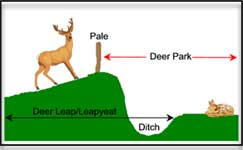
The Normans introduced the first fallow deer in the 11th Century to their park at Frithsden ( Le Frith). Medieval deer parks were of Royal patronage, used for hunting with very strict rules governing their control. Henry VIII no doubt used Ashridge for that purpose, although there are no records to confirm this. The first record of deer in the park at Ashridge was in 1681 when a certain Thomas Baskerville paid a visit and mentioned a separate park for red deer and one for fallow deer. The parks were not enclosed until some time after 1610, but a survey by Cave in 1721 shows one large enclosed park. When Peter Kalm the Swedish botanist visited the area in 1748 he noted that there were about one thousand deer in the Park, and some of them were pure white. Ash trees were laid down for them to gnaw the bark and sheds were erected throughout the Park for their protection in bad weather. The Park was enclosed by a fence or “paling” of wood, built on a bank to contain the deer. A “deer-leap” was introduced in the fence which enabled deer from outside to jump into the Park but prevented them from escaping. At this time deer parks were mainly kept as a sign of wealth and position in society, when the herds were culled for their meat, and skin. In 1903 two visitors reported that the Park held herds of red, fallow and Sika deer as well as St Kilda sheep and Angora goats. Prior to the sale of the Estate in the 1920s the red and the fallow were to be sold. For the red this was reasonably successful and a number were taken to Richmond Park. However, before the fallow catch-up could be organised, much of the deer park fencing had collapsed and many of the deer escaped into the surrounding countryside and formed the basis of the herd we see today. In 1928 the Agent for the Estate reported that, apart from the escapees, there were about one hundred red, two hundred fallow and twenty sika in the Park and shortly afterwards the National Trust decided that the red should be eliminated, as they were thought to be a danger to the public.deer
The remaining deer fencing was then removed and the fallow were allowed to go free. The number of the remaining fallow deer fluctuated over the years from a low point of one hundred and eighty in 1972 when one hundred were culled each year.

The ghostly figures out there are highly qualified professionals, required to wear an identifying arm-band and are strictly controlled, so have no fear when entering out for a walk in the woods – but remember to wear a high visibility Ashridge jacket.
Posted in Flora and Fauna, Surveys, Wildlife | Leave a comment

And so to bed….


ashridge hedgehogashridge hedgehog convoyashridge dead hedgehog

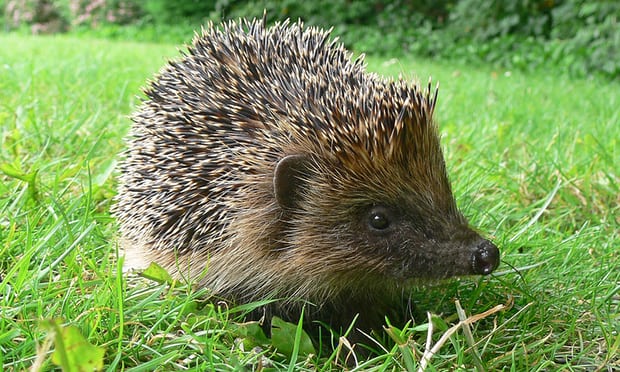
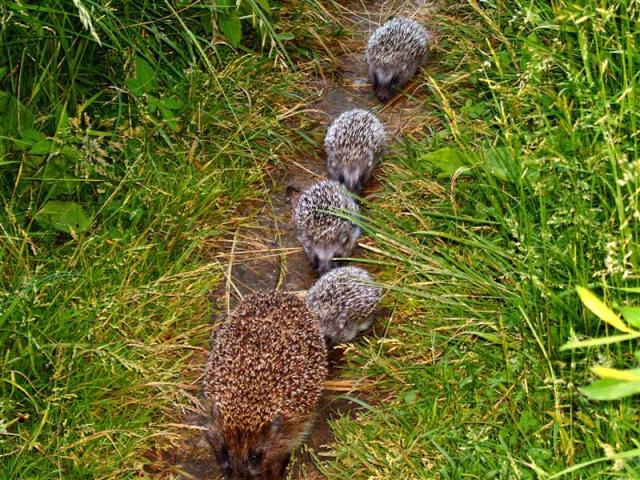
Hibernation is fast approaching for some, as Winter sets in. Small animals will be entering a dormant state and many humans will be looking forward to an extended period of remaining inactive or indoors. Not so for the conservation volunteers at Ashridge. This is a busy time of the year clearing up the debris on the Estate with the aid of the iconic bonfire. But beware there may be an endearing creature having already taking up residence under that log pile – hedgehogs are the British public’s favourite wild animal.

When did you last see a hedgehog at Ashridge, dead or alive?

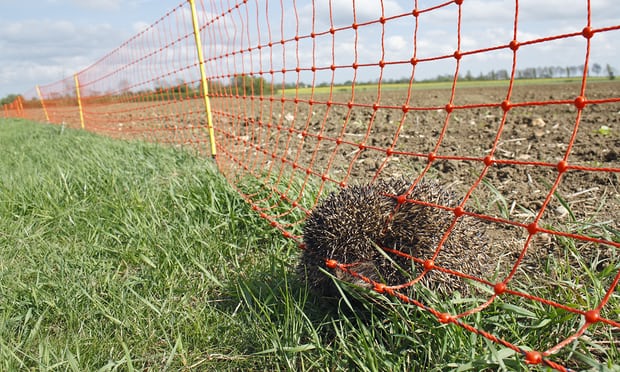
Being mainly nocturnal you would not expect to see one during the day. You might come across a dead one stuck in a fence, or one flattened on a road. During the day they they curl up in a nest of leaves or dried grasses, so Autumn is a good time for them. They do not mix well with dogs, badgers, bonfires, plastic fencing, or road vehicles, all of which are present at Ashridge from time to time.

All is not well on Hedgehog Street. In the recent RSPB’s garden watch survey, hedgehogs were seen in fewer gardens for the third consecutive year. Nobody knows how many hedgehogs live in Britain, but the experts say the number has fallen by 30% to under a million in the last fifteen years – in the 1950’s the number was estimated at some thirty six million!

Hugh Warwick an ecologist and leading expert said the beloved creature was facing a crisis in both town and country. Populations of rural hedgehogs may have dropped by 75% since the turn of the Century. The loss of hedgerows – hedgehogs are edge-living creatures – has hit the hogs badly, and there is less food for them. The biomass of invertebrates in the fields which is a vital component of the hedgehog diet has fallen dramatically in the last twenty five years. The hedgehog has a “complicated” relationship with another mammal – the badger. Warmer winters and more maize crops means badgers are thriving which leads to greater competition for invertebrates – worms, slugs and snails. If the badgers cannot find enough invertebrates they look elsewhere – and hedgehogs become a protein-rich source of food for them. The recent culling of badgers in the West Country has resulted in an increase in hedgehog numbers in some areas.

Let us hope that our friendly foragers can see out the Winter and wildly reproduce next year.

Posted in Uncategorized | Leave a comment

Life after death……..


This slideshow requires JavaScript.

I have just been reading Rowan’s blog about the storms, where he referred to The  “Queen” – a magnificent beech pollard in Frithsden Beeches, and it’s fall in June 2014.   The National Trust put up a notice nearby saying that the famous tree had entered the next stage of it’s life.  And they were, of course, right.

I had been discussing with Rowan for some time an idea I had for a blog article about what had happened  since it fell, to the extensive area it had occupied .   I often walk in that area, and over the following four summers I have been noticing and photographing the changes to the tree, the woodland floor and the surrounding trees.  When still standing, nothing grew in the dense shade beneath it and the ground was covered with a carpet of leaves.  The felling of trees along the nearby woodland margin of Broad Walk by the Trustees of Berkhamsted Golf Club in November 2013 was allowing more light in – but  before that could change anything, the tree fell.

During the next summer it fell, the leaves slowly died and fell from the tree, but they still excluded sunlight from most of the ground. Plants had not yet had the opportunity to grow, with just a bit of grass in a few places where the light allowed.  Sap still oozed from the above-ground roots near the tree. Green beech shoots were starting to grow along the exposed roots and from the  stump.

The next year, 2015, Spring brought signs of life to only one small branch – one thread must have still connected the roots to the branch, but this soon died.  Along the roots and on the main stump more green beech shoots appeared.  The now bare fallen branches allowed light through, and the woodland floor began  to “green up”  with grass, small brambles, foxgloves, willow herb and nettles taking advantage of the increased light. Other life took its opportunities, and fungus of numerous sorts appeared, and at times there were showers of sawdust falling as invertebrate life ate the dead wood.

In the following summers of 2016 and 2017 the plants colonising the area continued to thrive.  Brambles climbed over the fallen branches, initially the bare shoots reminiscent of the famous illustration of Gulliver pinned to the ground by the numerous tiny ropes of the Lilliputians. One of the first trees to colonise a newly opened area like this is birch, and the wind has sown many, with the tallest ones already five feet tall.  But the green beech shoots coming up from the roots and growing on the stump have all now gone.

The fall of the big beech affected its old neighbours – some trees were knocked over, some scarred.  A young beech near the tree miraculously managed to survive the falling branches.  The remaining trees surrounding the now bare space have benefited from the additional light.  Their branches are starting to grow into the space, and shoots are appearing on the light side of their trunks.

The tree’s life as a film location has drawn to an end.  It appeared in Harry Potter, Les Miserables, Sleepy Hollow and many more.  Even the stump appeared in London Spy in 2015.  But its future looks quieter.  A thicket of bramble will be less photogenic than the original magnificent tree, and the area is becoming overgrown and less easy to access.

I go back to remember my old friend, and watch as the tree rots, digested by fungus and invertebrates, and the trees and plants fight for their share of the light.  Brambles seem to be winning now – but I expect they will be shaded out as the birch trees grow.  Maybe then the birch will then take over for the next hundred years or so.  Then perhaps the young beech that survived the fall will  have its chance.

The changing scene of life goes on.

bm

Posted in Uncategorized | 3 Comments

Stormy days


This slideshow requires JavaScript.

With the close passing of hurricane Ophelia over Ireland then Scotland, we are vividly reminded of the storm of 1987.
Most Britons went to sleep on the night of Thursday October 15, thirty years ago without the slightest idea of the damage they would wake up to. Although strong winds had been forecast overnight, the country was actually to be hit by the worst storm of its kind in over three hundred years, and eighteen people were killed.
Indeed, the winds led to so many trees – an estimated fifteen million – being blown over that the landscape was dramatically altered overnight in National Trust properties like Wakehurst Place in West Sussex, where fifteen thousand trees were destroyed by the storm, and Toys Hill in Kent, which lost ninety seven percent of its woodland. Ashridge was on the edge of the storm and only lost a few trees – in fact the storm in January 1990 was to prove more destructive to our woodland, when forty seven people lost their lives in the UK.
Two meteorological factors caused what came to be known as ‘the Great Storm of 1987’: the huge temperature contrast in the Bay of Biscay – where cold air from the north collided with warm, moist air from the south – and the jet stream, which was much further south than normal for that time of year and moving very quickly. These two things combined to form a deep area of low pressure which then moved north eastwards, up the English Channel – bringing an extra tropical cyclone, with hurricane-force winds, to southern and eastern parts of the UK.
The cyclone caused damage to thousands of buildings and homes, ripping the entire roofs off some, and left millions without power – some for days – after trees fell on power lines. Coastal areas were particularly hard hit with winds of up to 122mph. Fallen trees and collapsed buildings also led to transport routes – both road and rail – being severely disrupted in south and east England. Much of the public transport system in London was paralysed, and workers in the capital were advised against travelling into work.
The Great Storm caused £2 billion of damage, and although a massive clear-up operation took place, it was days before many services were back to normal. It also led to a government inquiry into how forecasting could be improved, as the Met Office was strongly criticised for failing to provide adequate warning. Today their four-day forecasts are as accurate as the one-day forecasts were in 1987. Met Office forecasters had, in fact, been issuing warnings of severe weather for several days before the storm – but in 2012, chief meteorologist Ewen McCallum admitted that they had got it wrong.
Storms can of course take place at any time of year and it was to be a June blow which took out the oldest tree at Ashridge in 2014. The Harry Potter beech dubbed the “Queen” by Richard Mabey the celebrated author, which featured in a number of films, was particularly vulnerable to summer storms when in full leaf. It’s demise was probably due to the removal of nearby protective oaks on land owned by the Berkhamsted Golf Club. For some dubious reason they were clear felled leaving the “Queen” highly exposed. It is understood that the landowners were subsequently censured by Natural England and their forestry funding was questioned. Meanwhile Richard Mabey had visited and paid his respects.
At Wakehurst Place they are now celebrating the existence of a natural woodland after thirty years of decay and renewal, as we have at Ashridge – an untidy wood is a healthy wood.
The only sting in the tail from hurricane Ophelia as she barrelled her way north was the desert dust, dragged in on warm air to southern England from Africa creating a “red” sun at midday.

Posted in Uncategorized | Leave a comment

Claim to Fame


This slideshow requires JavaScript.

In season Dockey Wood attracts a lot of people – visitors in the Springtime for the bluebells and volunteers in the Autumn for the forestry work. This was the venue for the Thursday group who turned up in force this week to clear up the brushwood left by the foresters after they had carried out further thinning of the plantation. Dockey wood gained notoriety in 2016 as the first place in Britain to charge the public for looking at wild flowers, and has become the number one choice for visiting bluebell-philes, with an international following.

The trees in the plantation are now over fifty years old so the work is an annual event. The brushwood is used to great effect as a dwarf path edging to encourage visitors to keep off the Hyacinthoides nonscripta.

It is a quiet spot at this time of year with the flowers hibernating ready for their moment of glory next spring. Whilst the bulbs are building up their strength underground for the new season , overground the volunteers were using their strength to move heaps of brushwood, with the larger branches used for a new dead-hedge around the wood.

Visitors may well drool over the view next Spring but what was it like in the 18th century? The wood is shown on the Estate map of 1762 – smaller than today. The bluebells would have been there since they are a sign of ancient woodland, but there would have been no visitors apart from the local villagers of Ringshall who may well have picked a few to brighten up their cottages – as children we picked them for our school teachers! There would have been no bluebells on the surrounding Ivinghoe common since it was treeless without the shady conditions which the bluebells need. The landed gentry were not interested in wild plants leaving them for the country folk to forage for their medicinal cures and food, and flower gardening did not take hold until the 19th century when Humphrey Repton was employed in 1815 by the Bridgewaters to design a pleasure garden for their new mansion.

As part of the charging routine back in 2016 a roadside wire fence was erected to prevent the public from gaining random access, and this has had surprising benefits for the plant life by restricting deer access. Violet helleborines have appeared in the wood, along with a new broom, and patches of wood anemone – something to look forward to for next year.

Posted in Uncategorized | Leave a comment

Shine on Harvest Moon


Did you catch the Harvest Moon last week?
Leaves are falling, the days are getting colder, and thoughts are turning to winter time – it was cold on the hills last week for the volunteers. Autumn is well and truly with us and for nature lovers it is the time for the Harvest Moon.
The early Native Americans did not record time using the months of the Julian or Gregorian calendar. Instead tribes gave each full moon a nickname to keep track of the seasons and lunar months.
Most of the names relate to an activity or an event that took place at the time in each location. 
Colonial Americans adopted some of the moon names and applied them to their own calendar system which is why they are still in existence today, according to the Farmer’s Almanac.
The Harvest Moon is the name given to the first full moon that takes place closest to the Autumn equinox.
This moon gave light to farmers so that they could carry on working into the night to harvest their crops before the bad weather set in.
For us in the Northern Hemisphere the Harvest Moon rose late this year. Usually it occurs before the equinox in September, but this year the Harvest Moon was actually in October. This year’s Autumnal equinox came on September 22nd, making the full moon on Thursday the 5th October the Harvest Moon, because it is the closest full moon in the calendar. The reason why the Harvest Moon sometimes occurs in October is purely down to timing. The last October Harvest Moon was in 2009 on the 4th October, and the next one occurs on 1st October in 2020.
The high pressure of last week produced cloudless night skies giving spectacular views of the moon from the Beacon Hills, unaffected by any light pollution – a dream-like sensation. The Luton flight path added to the sensory experience. The film makers working around Gallows Hill may well have captured the experience for their period drama.

Sometimes people say the moon turns a deep orange for the Harvest Moon. This effect sometimes occurs if you glimpse the moon when it is close to the horizon, which is because you are seeing it through the thickness of the Earth’s atmosphere which can cause it to change colour. When it rises up into the centre of the sky, it shines a brilliant white.

Shine on harvest moon!

Posted in Uncategorized | 1 Comment

Labour of Love


This slideshow requires JavaScript.

The first Thursday in September started like any other Thursday in the summer for the group of flint “Wallers” in Cromer Wood, close to Little Gaddesden. They had arrived to make a start on the reconstruction of the inner flint wall of the Horseshoe Track. They broke for lunch at 12.30 as usual and collected in Golden Valley for a picnic lunch. This lunch break was to be a bit different to normal – a celebration of their effort in completing the outer wall of the Horseshoe Track. The group are a close-knit unit of twelve, past and present, and they all met up to share their thoughts and reminisce about the last five years – the time it took to complete this section of wall starting in 2012. There was even a special cake for the occasion, made by John Child to look like a flint wall!
With the start of the inner section of wall it was now possible to get an impression of how the carriageway would look when the inner wall was complete – another five years of work!
The flint wall project was started way back in 2001, when the first fifty yards of the “Black Path” was rebuilt. This was the route used daily by the estate bailiff William Buckingham, appointed in 1800, coming from the Estate Office in Little Gaddesden to meet up with the 7th Earl John William at the Mansion.
There was a direct route leading from Home Farm which allowed carts and supplies to be moved to the Mansion, as shown on the 1762 Estate map, and the rebuilding of the retaining wall for this trackway extending to one hundred yards was started in 2006 and completed in 2011.
With the arrival of heavy waggons to carry greater loads to the Mansion a new route with a gradual gradient was required, so the horseshoe loop was engineered as shown on the Ordnance Survey map of 1877, requiring two hundred and fifty yards of flint walling. This would have also provided a safe route down into Golden Valley for the Bridgewater’s carriage – a barouch. The “Wallers” have now completed the rebuilding of the outer wall of this route, and are now commencing the inner wall. So far the group have built some five hundred yards of flint walling in total – a mammoth undertaking spread over fifteen years!
The use of lime mortar for the project which was the standard method some two hundred years ago, has inherent problems with setting thus creating delays. Working in the winter is ruled out along with days of cold or wet weather, but surprisingly so far this year there has been no down-time. The flints are recovered from the original walls, with fresh supplies provided by the Trust. The group have another five years of engagement to look forward to!
Group members, past and present; Ron Cawdery, David Smith, Stephen Pearce, George Morris, John Childs, Barry Salmon , Eric Worth, David Kelland, David Nankevil ,Ray Cox , (Chris Ford, and Peter Finch not shown)

Thanks to Ray Cox for his contribution.

Posted in Uncategorized | 1 Comment

The Burning of ash-ridge


This slideshow requires JavaScript.

You know when it is Autumn at Ashridge, not because of the changing leaf colours, but because of the emerging bonfires. They are springing up all over the place – on Piccadilly Hill, in Witchcraft Bottom, even in the Estate yard. The most popular pursuit of the male volunteer is undoubtedly a ritual burning.

The autumn bonfire, like the first barbecue of summer, is a religious affair. It is dominated by the male of the species, requires ritual lighting, demands specialist robes in the form of a working hat and gloves, and produces a burnt offering of ashes. Most bonfires are built on the heap system – pile it up and hope it burns. At Ashridge we have dedicated fire -lighters like Tony Smart who employ the Boy Scout method. Using some dry kindling to start with, and once a flame is obtained then adding layers of larger and larger material. When a conflagration is achieved then chuck on the big stuff. Many Ashridge “fleeces” have suffered potmarks from raging fires. The grass fires often smoulder and burn for days, while material for the majority of fires comes from the scrub clearance, where the dense slow-growing blackthorn and hawthorn wood creates great heat.

And, like the barbecue, the bonfire is flourishing. It’s acrid smell gets everywhere ushering in the coming cold in the same way as cut grass introduces the hazy lazy days of summer.

This ancient tradition of setting fire to unwanted debris, the culmination of which takes place on Guy Fawkes Night, has never been more celebrated. Bonfire night can be traced to the Celtic Samhain festival when it was believed that the dead walked the Earth. Huge fires were built to burn spirit effigies to drive away the phantoms before they committed evil. This pagan custom was the prime late-autumn festival until the Gunpowder Plot.

Smoke that would do justice to a LS Lowry painting now curls from the most unlikely of places.

Meanwhile many councils, such as Guildford, have banned bonfires on allotments, and landowners who have any sort of estate or woodland apparently need permission from Defra to light a fire. It’s something to do with air quality and it can be a traffic hazard – it was not so many years ago that farmers were burning stubble and straw residue in their fields.

The Beacon has been a location for bonfires over the centuries warning of impending invasion, with a celebratory burning for the crowning of George V in 1911. Now a protected SSSI site such a celebration is unlikely to take place again.

There will always be plenty of unwanted debris at Ashridge for burning, so we need to keep our pyromaniacs in tow!

Thanks to Adam Edwards for his contribution.

Posted in Uncategorized | 2 Comments

MIND THE GAP !


This slideshow requires JavaScript.

Forget the exotic trips abroad – gap year students should stay in the UK and volunteer for the National Trust.

It’s that time of year, when thousands of young people across the country are making important decisions about their futures. Some may decide to take a break from the education conveyor belt and gain some other experience, like volunteering at Ashridge.
The traditional British ‘gap year’ consisting of travelling, with some voluntary work thrown in for the personal statement, has adapted to a changing socio economic climate. Young people are increasingly looking for experiences that offer something more impressive than a voyage of self-discovery, to put on their CV. They need to disown the current tag of “snowflake” – the derogative term used to characterise the young adults of the 2010’s as less resilient than earlier generations. They need to get their hands dirty and embrace the work ethic at an early stage. They know that they need work experience to avoid being caught in the cycle of no experience, no job. It is not just short term work experience placements that are needed however, it is experience of work and the world of work. This is backed up by businesses, who have been saying for years that young recruits aren’t ready for the workplace. The CBI reported in its 2016 Education and Skills Survey that employers are increasingly pessimistic that they will find enough new recruits skilled in leadership and management. The report also found that when hiring school and college leavers, employers look for a positive attitude to work first, followed by their aptitude, ranking both ahead of formal qualifications. So it seems obvious that there is an opportunity here to enable all young people to gain worthwhile experience of work and the real world, boosting their key skills and giving back to society at the same time.
The UK has plenty of social outlets to choose from – you don’t need to travel abroad to find a worthy cause to donate time to.
Volunteering, or social action as it is often known, is a gap year activity which looks great on CVs and helps to develop key skills whilst giving young people direct experience of front-line services and issues in areas such as education, the environment, health or social care.  At the moment this happens in a piecemeal way, but a big Government-supported full-time volunteering programme could make this greater than the sum of its parts, harnessing the energy and creativity of young people and encouraging them to tackle the social problems which many of them see played out around them.  This would benefit everyone, and would not require a hefty bank balance to fund expensive travel.
Ministers are being urged to introduce a legal status for full-time volunteers, who currently are officially classified as NEET (not in education, employment or training).
There are thousands of young people already engaged in full-time social action across the country but they are denied certain benefits such as national insurance credits, which is granted to students and jobseekers. Being classified as NEET when you give up your time – full-time – is also not the recognition these altruistic young people deserve.
The Government has set up the “Review of Full Time Social Action by Young People”, an independent investigation into the legal and regulatory barriers to full-time social action in the UK.  It is due to present its recommendations in December and it is hoped that the Government will give support for a year out spent undertaking voluntary social action.
Social action can deliver vital experience and introduce young people to the wider world of work beyond education. It’s a chance to go on that voyage of self-discovery and develop the key skills of leadership, management and also resilience that employers need. The charity City Year UK is calling on the Government to support full-time social action by introducing a structured programme by which anyone can take time out to volunteer for a cause they care passionately about, alongside support to reflect on what they have experienced and how they are developing as a result.
As far as the Trust is concerned, a workshop was held in April 2016 to determine the demographics of the volunteer workforce which concluded that we are white middle class, and elderly – the average age is seventy. Nothing wrong in that you might say, but with an ageing workforce of some sixty thousand it is obvious that volunteering work should appear as a more attractive proposition for a wider range of people. The Trust could therefore support the Government’s investigation by offering a program of recognised conservation work for young volunteers.
Ashridge volunteers have done their part by actively embracing this Blog which sets out to showcase their work to a wider audience, with a viewing figure fast approaching eight thousand hits.
Thanks to Sophie Livingstone for her contribution.

Posted in Uncategorized | Leave a comment

Keep out Phony Peach !


Phony peach: the next disease after Chalara threatening to devastate Britain’s trees, and also plants.
Xylella fastidiosa has wreaked havoc in the US and Europe and could dwarf the impact of ash dieback in the UK, where at Ashridge the ash trees have so far shown considerable resistance to Chalara.
Defra were found wanting some ten years ago for not imposing restrictions to prevent Chalara entering the Country because of E U implications – so what hope is there for stopping Phony Peach.
With experts warning that it could make the devastating ash dieback disease seem like “a walk in the park”, the UK is on red alert for signs that Xylella fastidiosa has entered the country.
First confirmed in Europe three years ago when it ran rampant across olive plantations in southern Italy, a subspecies of Xylella has since been detected in southern France, where it has destroyed vines and lavender plants, and in Corsica. Xylella fastidiosa has also been found in both South and North America where it is commonly referred to as “phony peach disease” and where it has caused severe damage to citrus and coffee plantations. In New Jersey it has attacked more than a third of the state’s urban trees.

According to guidance issued by the Department for Environment, Food and Rural Affairs (Defra), Xylella has already infected oak and maple trees, hebe, lavender and rosemary. It results in multiple symptoms, including wilting, diebacks, stunted growth and leaf scorches.
Raoul Curtis-Machin, head of horticulture at the Horticultural Trades Association, the body representing the UK’s growers and landscapers, said it had initially been thought that Xylella could not survive in the UK because of the climate.
“But last autumn the Animal and Plant Agency discovered a new strain, which is cold-hardy, in Corsica and France,” Curtis-Machin said. “It’s getting very close to Britain. What has alarmed us is that it’s quite difficult to spot and it affects a massive list of different host plants. The list has got so big that the EU has stopped publishing a printed list and just publishes it online. Unlike many plant diseases Xylella has the potential to affect multiple species, rather like the way human flu viruses can mutate.”

Horticultural experts have been lobbying hard for the EU to extend plant passport regulations, which currently apply only to wholesale importers. “But that’s only one chunk of a huge trade,” Curtis-Machin said. “There are a lot of garden designers going over to Italy and importing big olive trees. God knows what’s on them. You may not see the symptoms and a year later it could be hopping out on to the plane trees, and before you know it you’ve got the trees in the avenues of The Mall dying off.”

An outbreak in the UK would result in the introduction of stringent emergency control measures. All known host plants within half a mile of the outbreak would be destroyed. Sweeping restrictions on the movement of plants within a buffer radius of six miles of the outbreak would be imposed for five years.
This could have potentially devastating consequences for urban landscape gardeners. For example, an outbreak on a landscape site in Canary Wharf, east London, could result in the near shutdown of landscaping work in the capital.
The HTA says it alerted the government to the risk of importing ash dieback in 2009 without much success. To combat another disease taking hold, the association is trying to convince Defra and other agencies of the need to develop a secure market for UK-grown trees.
Despite pledges to improve the amount of woodland cover and tree planting in the UK, the amount of new planting in England has dropped from eight thousand acres in 2013-14 to six thousand acres in 2014-15. Experts believe the yet-to-be published figure for 2015-16 could be as low as four thousand acres.
“Trees have a stabilising effect on the climate,” Curtis-Machin said. “Trees absorb air pollution. You’ve got horrific levels of air pollution outside schools right now in a lot of our urban areas. As we’ve seen with the recent flooding, without trees water catchment is shot to pieces. We know that trees stabilise banks, so without them you end up with a lot more landslips and you get a lot more road closures.”

A bleak outlook for conservationists if Phony Peach arrives.

Thanks to Jamie Doward for his contribution

Posted in Uncategorized | Leave a comment