BACK AGAIN


dockey wood

There was a definite buzz in the air at Dockey Wood over the Bank holiday week-end. The exceptional sunny weather more than made up for the write-off from the previous week, and it brought out the visitors and the bees in large numbers. The volunteers were buzzing with pride, glad to show off their work in the wood now recognised nationally as the best in show for bluebells, surpassing many other famous sites like Sherwood Forest.
The seasonal clamour for the blue angels is much like that for the snowdrops at the National Trust site at Anglesey Abbey – white for purity, while blue offers protection, faith, strength and courage. Subconsciously that is probably why visitors return regularly year on year to view the sea of blue – some visitors have been returning regularly for over twenty years.
A name, a colour, a smell, a season – flowers will always have a potent collection of qualities to ensure that they will always be teasing us with memories of past walks, meetings and childhood outings. For the older generation a return visit to Dockey Wood is something of a right of passage – another year to be ticked off in a person’s lifespan!
The spring flowers are also a welcome attraction for the bees, since they have been pollinators for over eighty million years. Their future is now more secure with the E U ban last month on the use of neonicotinoids, a pesticide used on farmland which has a harmful effect on pollinators.  The picture provides a bee’s-eye view of their world in Dockey Wood.
With the returning regulars and the ever increasing number of new visitors from far and wide it is easy to visualise long queues at the gate in the years to come, thus requiring an over-flow car park in the adjacent meadow!

Thanks to Richard Mabey for his contribution.

Posted in Uncategorized | 2 Comments

The Ramblers’ Flower


In 1736, when Carl Linnaeus the Swedish botanist visited England, he came to Ashridge and when seeing the gorse in full bloom on Berkhamsted common knelt down and praised God for showing him so glorious a sight. Carl Linnaeus is famous for his work in Taxonomy, the science of identifying, naming and classifying organisms including plants, animals, bacteria, and fungi.
Some two hundred years later Barclay Wills, author, poet and field naturalist wrote with empathy, passion and vision about downland and the ubiquitous gorse.


Can you describe the gorse in spring?
It does not seem an easy thing
To do, but many of us try
To sing it’s praise anew; and why
We do so every one can guess-
‘Tis to record it’s loveliness.

I stand by hillside long and steep
Where, from the brow to valley deep,
The flower-decked gorse grows thick and tall-
An armoured refuge safe for all
The creatures of the wild that hide
Upon the long and steep hillside.

The clouds may frown, but wait until
The smiling sunbeams cross Norcott Hill!
They touch the flowers as they draw near,
And splashes, streaks, and dots appear
Like glowing, molten gold, flung hot,
From some gigantic melting-pot!

So lavishly the gold is spread
That some has left it’s prickly bed
And spilled below in golden showers
Upon the thinly curtained bowers,
Like tiny yellow lanterns lit
Outside the caves where rabbits sit!

Now, pondering by this common old
I wonder at such wealth of gold,
For decking Northchurch every way
Are other acres just as gay!
Oh, plant of such appealing power,
I christen you “The Ramblers’ Flower”!

Posted in Uncategorized | Leave a comment

A Spring-clean


This slideshow requires JavaScript.


s3 pring is here. It is announcing itself in those broken and surprising ways that are like the noises that come from the orchestra pit before the concert begins – a blast on a tuba, a run across the strings of a violin, or a sudden chord from the woodwinds. The Spring Equinox is passed, signifying longer warmer days , and there is hope in the air for a fresh start.

Most National Trust properties have been dusting off and sprucing up ready for the new season, and Ashridge is no exception. Here it happens automatically every year with a little help from the volunteers. Mother nature is in control – she sheds her winter protection for the new emerging buds and rots the old vegetation ready for the new, but she cannot handle litter. Enter the volunteers.
The exposed glass bottles and drink cans now sparkle in the spring sunshine having been hiding away for months in the old vegetation, and are awaiting collection. Collecting the litter from the far flung corners of the Estate is another unpleasant task offered to the volunteers, for many find it demeaning having to collecting other people’s trash, but the end result makes it worthwhile – returning the landscape to a pristine condition.
It is such a pleasure to enter a fresh green and pleasant landscape free from the debris which litters the roads as you approach Ashridge – you know when you have arrived! We should think of the Estate as a litter free zone and we might even receive an award from Keep Britain Tidy because they still exist, dating back to the sixties but are now largely an ineffective quango. With the new Governmental plans for cans and bottles becoming eligible for refund payments, there should be a reduction in littering in the years to come.
It is also the beginning of the fly-tipping season. No sooner than the weather turns warm people decide to clear out their garage, knock down the old shed or tidy the garden and perhaps dump the resulting rubbish at Ashridge. Fortunately we are not close to any large conurbation and if rubbish does arrive and is reported, the Trust are quick to remove it.
Onwards and upwards!

The colour palette for this piece is National Trust spring green, chosen to be fresh and inviting.

Posted in Uncategorized | 2 Comments

Clinkmere


This slideshow requires JavaScript.


One of the more unpleasant restoration jobs on offer for the volunteers has been the clearing out of the pond known as Clinkmere. The last time the timber debris was removed was in the Spring of 2016. Opposite the Visitor Centre, it is the most visited pond on the Estate and the most interesting piece of water. Nowadays used for educational purposes as part of the National Trust’s “Forest School”, it was originally dug to provide water for the commoners’ livestock on the open common. After the chalk had been dug out the hole would have been lined with “puddled” clay to retain the rain water, used by the passing drovers and no doubt the main water supply for the nearby hamlet of Moneybury Hill in earlier times.
Clinkmere is of great age, since it was clearly used as a boundary marker. The boundaries of the parish, county and ecclesiastical districts were laid down in Anglo Saxon times, and all pass through the centre of the pond making it some one thousand years old. With the parish boundary between Pitstone and Aldbury passing through the middle, it meant that the commoners from either parish could use the water-hole without fear or favour. First mentioned in the 14th century when “clink” referred to a keyhole, a legend has it that it was the location for the settling of affairs of honour. Unused since Victorian times, and following the inevitable encroachment of trees and vegetation, Clinkmere became sterile until it was cleaned out by volunteers in 1963, a huge manual undertaking at the time – it is four feet deep in the middle!
Clinkmere has the largest area of open water of all the thirty or so ponds on the Estate – many are silted up or are overgrown with vegetation, some have dried out and others are winterbourne, only filling up after winter rain. The degradation of the ponds has been recognised for some time, and in the Spring of 2014 the Trust had a plan to improve all of the water-holes within a five year period using fixed point photography to record progress. Following an incident in 2017 the Trust carried out a public safety survey of all the ponds, which resulted in a number of dead-hedges being built.
There may now be an unintended consequence arising from the recently installed dead-hedge and the adjacent log-pile, both being a ready source of material to be lobbed into the pond by the visitors – more work for the volunteers!

Posted in Uncategorized | Leave a comment

Breaking News


Following the appointment of Hilary McGrady as Director General on March 12th, we wrote congratulating her on the promotion, and enquired about a statement- of -intent from the Trust on plastic usage at the Charity.

Hilary McGrady
Director General’s Office .
Heelis
Kemble Drive
Swindon SN2 2NA                                                                                           12th March 2018

Dear Hilary McGrady

Congratulations from the volunteers at Ashridge on becoming Director General.
We publish a Blog (ashridgevolunteers .blog) in which we raise environmental issues and in January as a New Year’s resolution we challenged our volunteers to reduce their plastic purchase intake for the year ahead. This was in response to the plastic pandemic infecting the environment.
In December Mr Gove the Environment Secretary, haunted by the images in the Blue Planet II – BBC production, announced a twenty five year plan to improve the U K’ s environmental record with particular reference to plastic. This was followed by Theresa May in January outlining the Government’s proposals.
Since then a number of national companies and organisations have issued statements on their intended plans to reduce plastic usage. Also in December Lisa Svvensson for the United Nations issued a statement to the BBC about the ruination of the ecosystems of the oceans.
In January Water UK issued a national campaign for every shop, cafe and business to offer free water by 2021. In February the Queen banned plastic straws, cutlery and bottles from the Royal Estates, and Friends of the Earth launched their Plastic Free Friday campaign.
In January Helen stated that restoring a healthy natural environment was part of the National Trust’s ten year plan, but so far there has been no statement issued on plastic proliferation. As a leading environmental charity one would expect the Trust to have issued a statement by now outlining the approach to plastic reduction on the Estates and at the Properties.
Your comments would be appreciated.

Yours sincerely

rt

Rowan Trimmer
ex volunteer.


A statement was issued by the Trust and an action plan  launched on April 3rd, and we received a reply dated April 4th as detailed below.

NT_letter_2

The link to the National Trust website is here.


Posted in Uncategorized | 2 Comments

Keep off the grass……… the saving of Monument Green!


This slideshow requires JavaScript.

The conservation volunteers have played their part in the restoration of this leisure and picnic area by erecting a temporary perimeter fence. The Green is the focal point at Ashridge and consequently suffers from soil compaction because of the foot-fall from an ever increasing number of visitors.
Soil compaction is the physical consolidation of the soil by an applied force that destroys structure, reduces porosity, limits water and air infiltration, and increases resistance to root penetration resulting in a poor plant growth. This was first evident with the two oak trees which brought about the building of the dead-hedge two years ago.
The Green has seen better days when visitors were few and far between – the numbers have increased dramatically in the last fifty years. It is a SSSI site protected by Natural England because of the iron age burial tombs at the centre, and improvements like artificial drainage would be forbidden. The recent heavy rains have flooded parts of the area and the expected throng at Easter would have caused further damage with hazards for the public – a quagmire.
This was a considerable operation undertaken in variable weather conditions. Over one hundred wooden posts were erected to support the rope barrier, replacing some of the existing rough posts which are a common sight at Ashridge protecting grass areas from traffic. The new wooden posts and ropes are not very sympathetic at the moment, sticking out like sore thumbs, but they will soon weather and blend in well with the landscape.
There will be a small inconvenience to visitors having to make a detour on their way to and from Duncombe Terrace, but the barrier is already having a beneficial effect by diverting bikers and horse riders off the grass and around the Green. There is no legal right-of-way for riders across the grass but this is difficult to enforce. They create their own “desire lines” – convenient pathways across the site, which run in front of the Monument causing problems when the building is open to the public.

The Trust are taking advice from the neighbours at the Golf Club on the best way forward. This may involve the use of an organic fertilizer along with mechanical spiking to improve aeration, resulting in the need for more regular grass cutting – a job for the volunteers! The site is an unimproved grassland, never ploughed and supporting naturally occurring grasses, so it probably would not be reseeded.

Posted in Uncategorized | 2 Comments

The Year Ahead


This slideshow requires JavaScript.

Volunteers attending the recent Forum briefing were greeted by an all female line-up, rather apt when we are celebrating one hundred years of women’s suffrage. Susie led the team of Steph, Bev and Llona.
These meetings help to foster a togetherness between the disparate groups working at Ashridge – windmillers, flint wallers, shop keepers, conservationists, rangers, surveyors, carpenters and monumenteers. The detailed information provided, also enables the volunteers to confidently engage with the public and is a foundation for the “Service Vision” for staff and volunteers alike, being rolled out by the Trust. Offering the public something special on their trip out involves the difficult and dying art of conversation, so some tips were provided. One of the volunteers, from Dunwich Heath is on-message.
With an expanding work role, volunteers will now have a revised induction in place – an overall procedure with a detailed one for specific roles.
Following on from last years record recruitment, a target of four hundred and fifty has been set for new N T members in 2018. To achieve this an additional membership recruitment person has been taken on – Stephanie comes from a farming background which will be a big help at Ashridge. Volunteers are also being encouraged to join the team and help with the recruitment. The recent email from Josh sets out the position.
Other positions for volunteers include helping out at the Windmill, or running the mobility scooter service at the Visitor Centre.
As part of the twenty year woodland development plan , we can expect to see more thinning of the plantation in Dockey Wood, and a continuation of the halo work on veteran trees to help propel them towards an ancient status. More dead hedges we hear you say!
The annual biodiversity surveys on flora and fauna will continue to be rolled out, in order to monitor conservation performance at Ashridge.
Beacon Hill will feature in the new lottery funded iron age Hillforts Project run by the Chilterns AONB, and volunteers may be interested in joining up with this ground breaking archaeology where lasers will be introduced to survey the land.
Progress on the capital projects was outlined with refurbishments taking place on two cottages, with the conversion of Woodyard Cottage deferred for another year. The solution to the ever present parking problem was making slow process because of the need to complete a conservation management plan.
The outdoor visitor engagement days involving staff and volunteers directed at dog-walkers, horse-riders, and cyclists will take place again throughout the year.
It is always nice to meet up with old friends and acquaintances at the Forums and to exchange ideas. After years of regular service volunteers look for new challenges and requests were made at the meeting for more involvement in Estate work normally carried out by staff members. The recent hedge-laying work was a start, but some would like to get involved with tree felling, driving vehicles, and perhaps some bracken bashing. There is no reason why formal training could not be organised for brick laying or paving, or road repairs, or the restoration of some of the twenty or so ponds on the Estate. Here at the Blog we can provide background knowledge on the work that takes place at Ashridge, but nothing practical.
Some members were concerned at the inability of being able to put forward ideas that would be listened to. At the moment we do not have a dedicated volunteers’ manager to report to which is normally the case. The recent “Hello” letter from our new Director General to all volunteers was an open invitation to directly send your comments to the N T . We wrote to Hilary McGrady on your behalf congratulating her on the new appointment and requesting a statement–of–intent on plastic proliferation as it affects the Trust – we will let you know what transpires. The Queen issued a statement on plastic usage on the Royal Estates back in February.
There will be ten Forum meetings throughout the year, and the next gathering will be a coffee morning at the Visitor Centre on May 18th. See you there.

Posted in Uncategorized | 1 Comment

A Lost Friend


mk2

It was with intense sadness that the Ashridge Estate community learnt of the death of their long standing friend and comrade Michael Bean. 

Like so many of us, both Mike and his wife Carol became involved with Ashridge after retirement and the Estate quickly established a very special place in their hearts where they quickly became popular and much valued members of the Thursday Group.  Mike served with distinction for many years as Chairman of the Friends of Ashridge and was responsible for many of the initiatives which contributed so much to the life and well being of the Estate as well as editing the Friends magazine. 

They shared a great enthusiasm for travel and their stories of adventures shared in many exotic and far away places were an entertaining feature of many group coffee breaks. The forty eight hours they spent marooned on a sandbank up a South American river when their cruise ship ran aground was only one of the many amusing tales they had to tell. 

Mike was a much loved and hard working volunteer who finally fought a long and valiant battle against a cruel and merciless disease. With the love and support of his wife and family he faced the immense challenges it presented with great courage and never lost the wit and humour which made him such a warm and delightful companion. 

Our heartfelt condolences go out to Carol and the family who have lost a loving husband and father, and to his numerous friends and fellow volunteers who will deeply miss the “Little Giant” of the Thursday Group. We will remember him with great affection. 

The funeral will be held at the Amersham Crematorium at 11.30am. on Thursday 5th April.     

Posted in Uncategorized | Leave a comment

A voice from yesteryear……..


Our veteran volunteers who played their part in the Friends of Ashridge will remember the late John Wilson with admiration. john_post
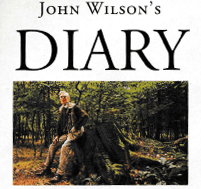
He was a gruff Yorkshireman drawn to the South to take a challenging job and was both feared and respected in equal measure doing a wonderful job moving the Ashridge estate forward. He lived to the ripe old age of ninety, passing away last year in his National Trust cottage in Ringshall.

Born in 1928, John Wilson began his career as a trainee forester on the estates of King’s College, Cambridge. In 1957 he was appointed Head Ranger for the Ashridge Estate and retired in 1991 after 34 years service.
“I always say that the Anglo-Saxons didn’t like trees – all they wanted to do was sit down and have a farm and clear all the forest land around the farm. But all my life I’ve liked trees and it was all I ever wanted to do. My mother wanted me to be a land agent, but I didn’t like office work – in all my time I’ve done as little of that as I could possibly get away with. There again I’ve always been a bit of a loner so I’ve never lived next door to anyone in my working life. That’s part of the gamekeeper’s lifestyle, that you can come and go and no one knows your movements.
The thing about the Ashridge Estate is the variety – I had everything I wanted here. There’s roughly 1,000 acres of woodland dedicated to growing timber for the nation, about another 1,000 acres which is not dedicated, like wooded commons, another 1,000 acres of heathland or downland and another 1,000 acres of farmland, but out of the 4,000 acres there’s literally 3,000 acres with timber on it.
Ashridge is also special because it was bought for the Trust by local people. It was always run as a country estate with it’s own management committee, and the public had access to it and the houses on it were lived in by estate workers or people connected with the countryside.
I’ve always thought that if you’re telling men to do a job you should be able to do that job yourself. If I send the men to fell a tree, I should know how to fell that tree properly. If I send the men to put up a fence, I should know how to put that fence up and how the job should be done. You need a damned good training on various private estates before you come into a job like this. I had my forestry but I’d also done gamekeeping, deer management and building work. Certainly you need qualifications, but I don’t think a qualified forester need be a university man as a lot of it is passed on by word of mouth.
Working for the Trust I never did less than 54 hours a week, and then there was the paperwork on top of that. I’d get up at half past five and go out round the estate looking at jobs I wanted to do for the rest of the day before I saw the men at eight o’clock. In early spring I’d be finishing off my plantings and then I’d get into my nursery work. In the summer I’d be going round doing fencing jobs and cleaning the plantations, and in autumn I’d prepare my plantations for planting again in the winter. Year round I’d go during the morning to see the three gangs working on the estate and make sure they were all right, and I’d go again in the afternoon.
Thunderdell Lodge, where we lived for 14 years, was the centre of operations. During the day when I was out Barbara would take all the calls for orders at the sawmill. She had people at the door constantly and she’d have to deal with all sorts of problems like road accidents, suicides, injuries to the men. We were on call 14 hours a day, which did mean that the days got awfully long. It was part of my job to know every crook and rogue in the district, and I had a good network of informers, a lot of whom are now little old ladies and little old men. They’d ring me up at three in the morning – “John, John, there’s shots on the common” – and I’d be out right away. We’ve always had poaching problems on the estate, but we’ve always caught them as well.
I’ve always been a hardwood forester rather than a softwood forester, which is why I came to the National Trust. I wasn’t terribly interested in going to the Forestry Commission because I didn’t want to deal with large-scale pine. I thought it was bloody boring, to be quite honest. Not to say I haven’t planted softwoods, yes I have, but hardwoods were my line, good old English trees. That’s what I’m really going to miss, looking after my plantations. I’ve always tried to get the best possible tree on a given area of ground, aiming for a good sound oak for timber. By planting oaks with conifers growing around them you get the oaks growing upwards to the light instead of ending up with a tree looking like an umbrella. In 100 years’ time you’ll have a tree that’s got a perfect bole, that goes up for 30 foot without any branches on, a beautiful tree for timber. You’ve got to be able to look at them and imagine what they’re going to be like a century from now.
Whatever job I went to do at Ashridge there was always something beyond the forestry: it could be birds, it could be flowers, it could be local history or archaeology, or providing picnic areas for the public or access for the disabled. I’ve always liked flowers, and I’ve always enjoyed birds, but where I went to school you didn’t go around shouting to your mates “I love flowers”. In 1963 I did a Field Studies course at London University, and before that I helped Phyllis Hager from the Hertfordshire Natural History Society set up a nature trail on the estate. It was the first nature trail on National Trust land and I think it was only the second in the country.
I see it as a way of life: the trees are grown, the trees are felled, and you replant them. I think life’s got to go on. If the trees are felled, that’s fine – you’re having their beauty for the time being and then they’re felled and you start again. I’ve always thought that whatever trees I’m looking at, and there were beautiful trees I was looking at when I came here, they were planted by some chap before my time, and he was looking at somebody else’s beautiful trees. It’s a cycle. When you get to my age, of course, you’re reaping your own benefits – some of the trees I’ve planted are 70 foot tall now, and that doesn’t half make you feel old!”

Interview by Sarah-jane Forder
The above interview is reproduced from the National Trust Magazine – Spring 1992.

Thanks to Janet Staples for her contribution.

Posted in Uncategorized | Leave a comment

Go Pollarding


This slideshow requires JavaScript.

the volunteers have been visiting Frithsden Beeches helping to restore the old    plantation by creating new beech pollards to succeed the ancient ones, like the late lamented Harry Potter tree. Frithsden Beeches has seen better days – before the grey squirrels arrived in force. Today it is hard to find a sapling which has not had the bark removed by this alien – the stripping of young bark is widespread in the springtime when food is scarce.

Pollarding is a pruning practice which removes the upper part of a tree promoting a dense head of foliage and branches. It has been common since medieval times and maintains trees at a predetermined height, above the reach of browsing cattle and deer. Wood pollarding tends to produce upright poles, ideal for fences, and posts, with some of the new growth used as fodder for livestock.
This management practice helps to maintain habitat that occurred in the original wildwood. Old woodland pasture plays host to ancient trees whose lives have been extended for many years by pollarding, supporting an extraordinary array of fungi, insects, mosses and lichens. The wood plantation would have been foraged by the commoners’ pigs in the autumn period – a custom known as “pannage”. – because it was part of the extensive Berkhamstead common.

The original beeches, planted in the mid 1700’s are not shown on the Ashridge Estate map of 1762 when it was still an open common. They would have been pollarded after some twenty years by having the crown removed which encouraged the side growths. Peter Kalm the Swedish botanist when visiting in 1748, met a farm labourer with a special kind of iron crampon for climbing, for the trees in the hedgerows and on the commons were all pollarded and had no branches to climb up, and ladders were too  expensive and awkward to carry about. Today the old trees in the wood are passed their prime and are subject to decay, and have not been pollarded for over one hundred years following the demise of the commoners.

While many beeches in Frithsden survived the great storm of 1987 they suffered heavily from the spring blow in 1990, when plenty were felled. The old pollards were top heavy having not been cut for over a century whereas regularly cut trees would withstand a storm because of their low centre of gravity. Within a few years most of the fallen trunks had been cleared up, in line with the then current thinking in an ongoing debate over whether man should interfere in such matters. In post-storm 1987, the National Trust did not believe that fallen trees met with the public’s perception of what “a wood should look like”, and so they removed them. Over the ensuing years it transpired that much of the Trust’s man-made regeneration and planting was not successful. In areas where no one intervened the wood begun to flourish, and it has since become National Trust policy to intervene much less, except where public safety is at risk. The current thinking is that an untidy wood is a healthy wood.

Richard Mabey the celebrated author and naturalist based his book “Beechcomings” on the trees in Frithsden Beeches over twenty years ago – it would be interesting to know what he thinks of the wood today!

Posted in Uncategorized | Leave a comment