10,000 and counting…..


Hello Volunteers – you have now clocked up over 10,000 hits on the ashridgevolunteers.blog – a milestone achievement.

The last twelve months has seen the publication of over seventy articles, far fewer than in the previous year, but viewed more widely. The articles have been given a more detailed content, and have included a wider spectrum with topics of national importance allowing followers to be more aware of environmental issues, as with the plastic problem. The Blog is not judgemental and aims to highlight the achievements of the volunteers as and when they are newsworthy – volunteering is a continuous process.

The viewing figures on the articles give an insight into the most popular subjects. The most viewed article has been the report on the Plant Fair with one hundred and sixty six hits (166), followed by the Volunteers Party (91). The achievements of Bob Davis – Walk Bob Forester’s Way was well received (85), and the piece by Barbara Matthewson – Life after Death – on the Harry Potter beech was highly rated (73). Reports on the Belted Galloway cattle, and the deer cull came in at (68) and (69), and Snakes Alive slithered in at (65). Articles on bees, butterflies and birds were disappointingly low around the twenty mark, with the Wild Flower Walk propping up the list with just three visits. Overall the average readership figure amounts to forty four views per article.

Last year YouTube announced that they would no longer allow creators to make money from advertisements on their videos until they had reached a viewing figure of 10,000! Having reached a similar position with the Blog, you can rest assured that we will not be looking for any income from the introduction of any form of commercial advertising. Our time and costs are considered as part of the volunteering ethos.

Best regards

rt

Posted in Uncategorized | 3 Comments

Get Coppicing


This slideshow requires JavaScript.

Volunteers have recently been learning the art of coppicing – in Old Copse – a traditional woodland management technique that was practised extensively until about one hundred and fifty years ago at Ashridge.
Areas of woodlands, or ‘coupes’, are harvested on a rotation of up to thirty years. Most coppice woodlands are now classified as neglected or stored coppice, which means that they have not been cut for a number of rotations.
Coppicing  exploits the capacity of many species of trees to put out new shoots from their stump or roots if cut down. In a coppiced wood, which is called a copse, young tree stems are repeatedly cut down to near ground level, known as a stool. New growth emerges and after a number of years, the coppiced tree is harvested and the cycle begins anew.
Sweet chestnut from coppiced woodlands is ideal for traditional fencing as it is naturally inclined to split down the grain. Chestnut timber is similar to oak but is more lightweight and easier to work. It has a straight grain when young but this spirals in older trees. In south east England sweet chestnut is coppiced to produce poles. For fencing it gives a rustic appearance and is rich in the natural preservative tannin, making it extremely durable, stable and resistant to rot. 

To protect the new growths from predation by the deer which run wild, dead hedges are now employed.
Before the Bridgewaters arrived in 1604 the deer ran wild and were hunted by the Crown, but the Park was enclosed sometime in the 1600’s with a “palisade” of timber on an earth bank to contain the red and fallow deer, kept for their venison. The fence required a considerable amount of timber from the Estate being some five miles in length, and cleft beech poles were probably used at that time. At some point it was realised that cleft sweet chestnut was a better proposition so the tree was introduced and grown in Old Copse. The trees would have been regularly coppiced probably every ten years to obtain the straight long poles some six feet in length for the fencing.
To construct the palisade the chestnut poles would be cut down and transported to the fence-line where they would be prepared. Thin poles would be cleft with an axe and larger timbers would be split with wedges. The cleft poles would have been driven into the soil bank side by side. Before the 1800’s nails were cut from wrought iron and were therefore expensive, so the palings would probably have been free standing and only later would post and rails have been introduced – labour was cheap and readily available in those days.
The Estate installed a metal fence in 1880 parts of which can still be seen along the boundary at Little Gaddesden Green.
Old Copse was an enclosed area on the Aldbury common from which the commoners were excluded, although they were probably allowed “pannage” for their pigs in the Autumn when the nuts were ready for harvesting. They were probably also allowed the brushwood residue from the prepared poles for their fires and bread ovens – firewood was highly prized by the cottagers and nothing went to waste.

Posted in Uncategorized | Leave a comment

WATER END


This slideshow requires JavaScript.

The best time to plant a tree was twenty years ago and the next best time is now – Chinese proverb.
So some of the Thursday group volunteers did just that. Three black poplars planted at Water End, along the edge of the road to the Red Lion public house which dates from 1731 – a remote corner of the Ashridge estate.
The land was probably acquired around 1810 when the 7th Earl Bridgewater was making improvements to the road network leading to his new Mansion. Originally the road ran along the other side of the river to a ford, crossing the river Gade next to the public house. John William was probably responsible for the building of the current road bridge and improving the road leading to the main Estate entrance at Nettleden Lodge, built in the late 1600’s.
According to the Forestry Commission, the black poplar is the most endangered native timber tree in Britain. It is a broad-leaf deciduous tree which can grow to one hundred feet and can live for two hundred years. The bark is dark brown but often appears black, and is thick with numerous fissures and burrs. Twigs are lumpy and brown in colour, and the leaves are shiny, green and heart-shaped, with long tips and a mild scent of balsam. Young leaves are covered in fine, tiny hairs.
The black poplar is dioecious, meaning that male and female flowers are found on separate trees. The flowers develop as catkins -male catkins are red and female catkins are yellow-green – and are pollinated by the wind. Once fertilised, female catkins develop into fluffy cotton-like seeds, which fall in late summer.
As a declining species, it is rarely found and often grows in isolation. The black poplar is most prevalent in Shropshire, Cheshire, Somerset and East Anglia, growing best in boggy conditions, alongside ditches and on floodplains. There are fourteen wild mature recorded trees in Bedfordshire, three in Buckinghamshire and just two in Hertfordshire.
It is is the food-plant for the caterpillars of many moths, and the catkins provide an early source of pollen and nectar for bees and other insects, while the seeds are eaten by birds.
There are so few wild black poplars left in the countryside that it is unlikely that they will pollinate each other, and with the planting of cultivated trees there is a lack of the true wild species. No doubt the Trust had this in mind when sourcing the new saplings – they do not plant many new trees at Ashridge so this is a welcome addition.
The saplings are over six feet tall and will be a striking feature in years to come – should you wish to take a look then a word of warning – do not walk at the water’s edge. You may suddenly find yourself up to your knees in mud and needing rescuing! The Trust do not want lone rangers walking in dangerous areas.
Another interesting plant at Water End, on the river bank behind the Red Lion pub there are some fine examples of a sedge – Carex Paniculata or greater tussock sedge which can live for at least fifty years. At first glance you might be forgiven for thinking that the carex look like camouflaged soldiers ready for action, rather than tussocks!

Thanks to Ed Bennett for his input.

Posted in Uncategorized | Leave a comment

Ling Ride


This slideshow requires JavaScript.

The conservation volunteers have recently been working along Ling Ride, part of the Ivinghoe common which used to stretch south passed Ringshall down to Witchcraft Bottom. Ling Ride is a rare example of lowland heath which the Trust are now actively restoring to its former state. Lowland heathland is a hugely important wildlife habitat and cultural landscape, and the area that survives today is but a small part of what existed one hundred years ago on the common.
Lowland heathland is a landscape characterised by plants like heather or ling and gorse, and trees such as Scots pine and birch, lying below one thousand feet – above that it becomes moorland – and is usually found on poor acidic soils.
Lowland heathland on the scale that we see today probably did not exist before the arrival of Bronze Age settlers, about 4,000 years ago. These early farmers cleared trees and introduced grazing animals and grew early cereals. This human activity, coupled with a change to a wetter and cooler climate, eventually led to the heathland landscapes. For hundreds of years Ivinghoe common was an open scrub-land used by the commoners from Ivinghoe and Ringshall until 1825 when the Bridgewaters enclosed the land. They grazed their livestock on the common during the summer months which was called transhumance, cut bracken for winter bedding for their animals back at the village, cut gorse for their fires and bread ovens, and dug chalk for building purposes. William Ellis , in “the Timber Tree Improved” in 1750 remarked that gorse was “ so much coveted that at Ivinghoe, and Berkhamsted, and many more commons they will not give it time to grow”.
The trees that we see today on the common have all developed in the last one hundred and fifty years. Some of these trees are now being cut down to allow the heather to re-establish, and course grass is being removed, while invasive gorse scrub is being managed.
Gorse scrub occurs wherever soils are light and free draining, in areas that are relatively free from severe frosts. It is very important for birds, and for invertebrates as a number depend up on it, but it can encroach on to otherwise valuable habitat.
Gorse is relatively short-lived – up to twenty five years – but with careful management, its vigour and value for wildlife can be maintained. The common gorse at Ashridge is Ulex europaeus and is the most familiar and widespread, and has the most robust growth character. It is in flower for long periods, so is an important nectar source in early spring and early winter, when little else is in flower. Old and degenerate gorse is relatively poor for wildlife, and very old, leggy gorse rarely regenerates when cut, although most cut stumps under ten years old will regenerate within a year.

It is perhaps too much to hope for a return of heathland highlights like the nightjar or adder, both of which were native to the area – in 1829 a villager died from an adder bite.

In 1420 the common was given to the Bonhommes in the monastery, and it later reverted to the Crown after the Dissolution in 1538. Queen Mary the 1st gave it to the Bishops of Lincoln in the 1550’s when it was known as Bishop’s Heath, but it reverted back to the Crown on her death. Lord Ellesmere, Chancellor to James 1st purchased it along with the Ashridge estate in 1604. It acquired the name of Ling Ride sometime in the 1800’s.

Thanks to Richard Gwilt for his contribution. 

Posted in Uncategorized | Leave a comment

The Heavy Brigade


This slideshow requires JavaScript.

The Wednesday ad hoc group are a small select band of volunteers with a characteristic in common – some serious manpower.

The gate guarding the entrance to Golden Valley adjacent to the Mansion having been destroyed, the team were assembled to install a rapid replacement. This latest gate is the third one in as many years on this spot, so it is hoped that it will stand the test of time.

The gate was constructed in the Estate Wood -Yard to the usual specification by Phil Penn and Bob Spooner.

Although understrength – four of the team were absent – Arthur Whiting, Mike Keen, Martin Arnold and John Gartside, the group completed the installation in five hours, with staff member Matt Bond leading the team with the tractor mounted auger to dig out the three post holes up to a metre deep. Then enter the team to erect the oak posts and back-fill with type one slate chippings brought out from the Estate yard, and then hang the gate. No mean achievement for the team of Andrew Reeve, Andy Neill, Tony Deighan and Tony Smart.

This is a good example of the new N T policy of getting volunteers to carry out challenging technical work normally undertaken by the staff.

Today the roadway is used only for access by the N T and the tenant from the Dairy Farm when visiting his cattle.

Winding the clock back to the 1800’s, the roadway was the main access for carriages visiting Ashridge from London, the route coming up from Water End through Nettleden Lodge. The mode of transport in those days during the summer months for the Brownlows (after 1849), was their barouch. The head coachman wore a plum coloured livery, grey wig and three cornered hat, with two footman standing at the rear wearing blue with white stockings for special occasions like the State Opening of Parliament. They had gold buttons emblazoned with the initial “B” on their tunics. The local villagers they must have regarded them as demigods, whilst they had but their dreams!

Sorry Tony we forgot to give you credit for your contribution and pictures – nice one

Posted in Uncategorized | Leave a comment

Events dear ……..


The response from Harold Macmillan in the sixties when asked what a prime minister most feared – “Events dear boy, events”. As volunteers we have nothing to fear from Ashridge events other than some really bad weather! They are a passage through the seasons to be enjoyed, and something to look forward to at a depressing time of the year.

This year there are twenty events until August – one less than last year.

Walk the Chalk is a new approach being a drop-in event on the Beacon to learn about the flora and fauna on the SSSI site – a site of special scientific importance.

The “Creatures of the Night” event of last year has been dropped – the tour guide has moved on!

There will not be any “Larking around” on Northchurch common!

The attachment lists what can be expected, so check out the details by clicking on this link, and join the throng.

Posted in Uncategorized | Leave a comment

Superheroes


This slideshow requires JavaScript.

If you are one of our regular litter pickers on the Estate, consider yourself as a superhero – a volunteer ranger going beyond the call of duty, fighting the crime of littering!
The problem is extensive with many miles of roadside verges and over twenty car parks or pull-ins to cover. In fine weather this week over thirty volunteers in seven groups dispersed to cover the Estate. As conservationists we take a pride in Ashridge and like to think of it as a litter-free zone in our polluted environment. Picking up other peoples litter, which often includes unmentionables can be considered as demeaning – that is why so few people do it. The Trust consider it to be an “unfortunate” part of the estate management. kbt_logo
Remember when there used to be a real fuss about litter? Back in the Sixties, Keep Britain Tidy was launching huge campaigns featuring celebs such as the Bee Gees, and Eric and Ernie, followed by Abba in the Seventies. Because it was new and eye-catching, we sat up and took notice. Our country was beginning to look a mess and the message struck home. Initially, things improved but then interest faded. Fast forward to 1988 when Margaret Thatcher picked up the baton, and launched a “Tidy Britain” campaign by picking up litter in St Jame’s Park and making it a political issue. It was no longer a trivial issue, but today we would regard that event as a cynical photo opportunity.
Somehow since that time we have grown to take litter for granted. It is almost as though we expect to find it as part of the landscape – and even as an unavoidable part of modern life.
Since 1960 the UK’s population has grown by over twenty per cent, but in that same time the amount of litter has risen by a whopping five hundred per cent. More than thirty million tons of rubbish are collected from our streets every year and local authorities spend around a billion pounds cleaning it up.
“If an area is neglected and badly maintained, crime and anti-social behaviour will increase, and vice versa,” said the chief executive of Keep Britain Tidy. “Litter breeds squalor. You feel it’s a squalid place, so you might as well behave horribly, because no one else is showing any respect for the area.” “Even worse, the problem is self-reinforcing. That’s because there is no simple divide between people who litter and people who don’t. Yes, there is a hard core of litter louts – mostly teenagers – who are doing it to flout authority, or because they’re too focused on their conversations to worry about where the litter falls”.
One analysis found that only 12 per cent of the population fall into the “Life’s too short” or “Am I bovvered?” camps, compared with 43 per cent who are “well behaved”. Instead, the hard-core offenders are vastly outnumbered by the occasional litterers – the furtive, reluctant types who try their best not to do it, and feel guilty, or blame the lack of bins, when they do. Surveys suggest that half of the public fall into this category every year – although that includes the lightest litterers, making up 27 per cent of offenders, who limit their wrongdoing to the occasional piece of food or fruit, and console themselves that “it’s biodegradable”.
Although people blame their littering on a lack of bins, when the bins are provided, the same area becomes an acceptable place to dump their waste, especially when they are full. That is why there are no litter bins on the Ashridge estate. You are not likely to catch the offenders in the act, and many of us would lack the courage to challenge them so perhaps the best alternative is to strive to set a good example, to nudge the collective social norm back towards being civilised.
The lesson from the scientists is that for those of us worried about litter, we cannot slacken our efforts because once it becomes acceptable to litter in a given area, the tendency becomes self-reinforcing.
Meet “Trash Girl” the latest superhero “on-message” in Norfolk.


Posted in Uncategorized | 2 Comments

A Dog’s Dinner


This slideshow requires JavaScript.

The volunteers have been clearing up the Prince’s Riding after the Trust removed a number of lime trees which are not native to the area, and were encroaching on the line of sight from the Mansion to the Monument.

The Monument is the most significant artefact on the N T Estate, open to the public from April to October when it is regularly manned by the volunteers. Not much has been written about the granite Grade II listed column, and the N T do not have an information board or leaflet as yet, to help the volunteers engage with the visitors – it has a complicated history.

The monumental Doric column built on classical lines in 1832 as a tribute to Francis the 3rd Duke of Bridgewater, the “Father of Inland Navigation”, had it’s roots in Paris in 1829. The idea and the funding for the monument came from the eccentric 8th Earl, Francis Henry. Following the unexpected death of the 7th Earl, John William in 1823, Francis Henry inherited the title of Earl and a life interest in part of the Bridgewater Estates while living in France, at the same time as the widow Countess of Bridgewater occupied Ashridge for life.

It is curious as to why Francis Henry should wish to commemorate his older cousin in such a way, and at such a spot. Normally commemorative structures are built at ground level, to be seen and admired by the public at large – most admirers would be satisfied with a plinth. Clearly this was not going to be the case for our benefactor Francis Henry, while the only visitors in 1832 would have been the aristocratic friends of the Bridgewaters. Positioned on high ground away from the public gaze, the monumental column must have been built for family self-aggrandisement, viewed daily by the workers and tenants of the Estate in the nearby villages and farms in the Aylesbury Vale.

When Francis Henry was a young man he spent time with the canal Duke on his workings at Worsley in Lancashire hoping to write a biography on his distant cousin, but when he found out that he had only benefited to the extent of forty thousand pounds from his will in 1803, he felt an injustice and cancelled the idea and left England. While living in Paris as a bachelor, Francis Henry became a celebrated eccentric, often having his dogs dine with him at the dinner table! He could well afford the cost of the Monument with an annual income of some forty thousand pounds from the Bridgewater estates, but in his will he failed to mention his immediate family. His will in 1829 would seem to indicate that he had softened in his attitude to the old canal Duke, having often maligned him.

His executors were then presented with the problem of getting the incumbent Countess residing at Ashridge to accept the bequest of thirteen thousand pounds because she thought that the design for the obelisk was “ a specimen of very bad taste”. The Countess engaged the architect to the Mansion, Sir Jeffrey Wyatville to redesign the monument and it was probably banished to the edge of the Estate only to be viewed from the Mansion at a distance along the Prince’s Riding.

Monumental columns were not commonplace at that time. The only comparative column in England was the Monument in the City of London built in 1677 with it’s golden orb commemorating the great fire of London standing at two hundred feet – twice the size of our column. In London a similar column for the Duke of York was erected in 1834, and Nelson’s column arrived in 1843. So where did Francis Henry get the idea from while living in France?

At the time political power and prestige in Europe was in the hands of Napoleon, and he directed that a column should be erected in his honour in 1810 in Paris – the Vendome column a few miles away from Francis Henry’s mansion!

So the Ashridge estate inherited a costly ornamental building with no practical purpose – a folly! The original cost would equate to one and a half million pounds today, but in 1832 labour was cheap while hunger stalked the land.

Posted in Uncategorized | 3 Comments

A Fateful Day


This slideshow requires JavaScript.

Ashridge volunteers need to be aware of the hazards of outside winter working on the Estate.

Some two hundred years ago today, on the 16th January 1823, the 7th Earl John William was holding a shooting party for the great and the good.

The winters in the early part of the 19th century were often severe and January 1823 was no exception. Those attending included the Duke of York, the Duke of Wellington, the Marquis of Salisbury, Lord Verulum and others. The event passed off without incident, but by February the Earl was having trouble with one foot and reports suggested that he had suffered frostbite as the result of too long an exposure during the January shoot. There were several visits to London during March and April, accompanied by Lady Bridgewater during which time an amputation was performed on the foot to remove some toes. On their return the Earl’s movements were much restricted and things were fairly uneventful for a few weeks until October 1st when things worsened and he became progressively unwell. He died on the 21st October probably because of gangrene poisoning.

He was interred at a solemn ceremony on 30th October in Little Gaddesden Church. So passed a wealthy nobleman to his final resting place alongside his ancestors. Curiously his death seemed to attract little media attention at the time, but it was said of him that he was distinguished for his love of the arts, his hospitality, and the employment given to the poor on his vast estates. Apparently on his death bed he could not accept the doctor’s prognosis that his last hour had come. His vanity was all to see at such an untimely death. “ No, no it cannot be”.

The excessively wealthy Earl died from a totally unexpected event occurring on his own Estate. He had completed the new Mansion by 1817 as a lasting memory to Francis the canal Duke, and was ready to become a landed aristocrat in his time, but died early at the age of seventy without issue. His wife Charlotte the Countess of Bridgewater outlived him by some twenty five years, residing at Ashridge until 1849, continuing her husband’s ambitious plans while administrating the Estate for the duration.

Cold weather working is covered in the Risk Assessment document provided to volunteers!

Posted in Uncategorized | Leave a comment

Why I volunteer……………..Simon New


Having been a member of the National Trust for almost 25 years, discovering over 100 properties and 50 estates, with Ashridge being visited regularly throughout this period, the notion of having some closer involvement with the National Trust became more central on my radar screen as years passed by.

I relished the experiences of visiting new properties, chatting to the volunteers and absorbing their knowledge.  I admired (and envied) the opportunity of becoming involved in something one could be so passionate about.

Bringing up a family, combined with my career, culminating in co owning a couple of businesses, did not lend towards having any spare time to get the involvement and the ‘buzz’ of becoming involved with the National Trust, which I had been seeking.
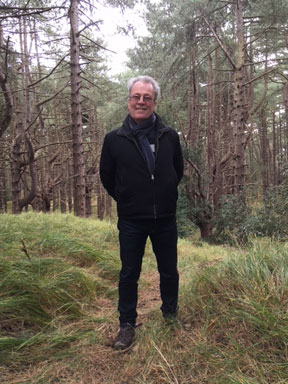
IMG_2171

However in 2016 a change of circumstances led to me having time on my hands and so I looked to seeking that involvement with the National Trust that had eluded me to date.

It didn’t take too long to work out that Ashridge was the place I wanted to be. I already had a connection with Ashridge and knew it quite well. It is relatively local to where I live (Harpenden), the work is outside and I love to be active and get involved.   

I started in July 2016 – and I have not looked back since. I have done so much and I have learnt a great deal. I thought I knew Ashridge! However there was so much that had passed me by. Since volunteering I have even found myself cycling and walking in different places within Ashridge to fill the knowledge gaps.

I realise that in comparison to some of my fellow volunteers I am a ‘newbie’, but, fast forward 18 months and the following gives an idea of what I have done and why my volunteering at Ashridge means so much to me.

Pulling up fences that have fallen into disrepair, clearing ponds, bracken rolling, clearing brash, painting metal railings, building dead hedges and of course, bonfires, all represent just some of the varied tasks done on a Thursday or Sunday. Then there are the events too, whether that is the Easter chocolate trail, the Fun Ride, supervising at Dockey Wood or assisting with the fund raising event for veteran and ancient trees. As time goes on so the range of tasks and experiences get wider.

But what a place to work! And such an enjoyable commute too! Retrieving fallen fencing along Clipper Down with extensive views of the Vale of Aylesbury as a backdrop, or picking ragwort on Ivinghoe Beacon, seeing church steeples piercing through the mist, hugging the contours. It doesn’t get much better than that!

For me it is also about being with like-minded people. It’s about mopping up the knowledge the foresters have and my fellow volunteers too, many of whom have had a life-long interest in flora and fauna and have volunteered for years, often for other organisations as well as the National Trust.

The volunteers are a great bunch of people, from varied backgrounds but with a common passion. We have great fun volunteering and work well as a team with many friendships and additional activities evolving from the work we do.

In the relatively short time I have been volunteering I have learnt so much – and there is so much more to learn too. One often takes for granted one’s immediate environment but volunteering at Ashridge and learning about its history, the land use, the flora and fauna and the Estate’s evolution has been so interesting and rewarding.

Learning new skills is very satisfying and I thoroughly enjoyed spending 3 hours with Emily teaching me and a couple of other volunteers the traditional skill of hedge laying.  

Making a difference motivates me. It’s amazing what a team of volunteers can do in a relatively short space of time. One of my highlights and proudest moments was completing the dead hedge around the oak trees at the Visitor Centre in the autumn of 2016. In three hours – a work of art, worthy of featuring in the Tate Modern, and certainly featured with some interest on Facebook for a while thereafter.

I am passionate about my volunteering at Ashridge. Ironically, since I started, I went back into full time employment and found myself taking leave to volunteer!! I was that committed. I really look forward to my Thursday volunteering and feel a sense of loss if I miss a week. I have now made adjustments to my work / life balance and ensure that Thursday mornings are free. 

Volunteering at Ashridge is a passion fulfilled for me and adds quality to my life. I would thoroughly recommend it and would not be without it.

 

sn

January 2018

Posted in Why I Volunteer | 1 Comment
