The Flint Wallers Go Round the Bend


bend

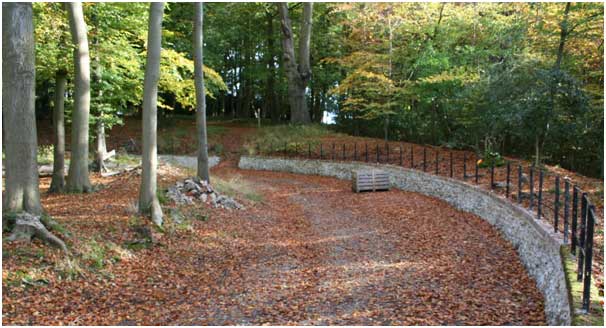
The end of October has brought the building season to an end,  and the completion of about 35 meters (some 40 yards) of flint wall, taking us round the bend in the Horseshoe Track. Having got round the bend in the track, means that if you look down the track from the road the wall appears continuous down the left hand side, and walking up the track from the Golden Valley you can see the wall before you go round the bend. There is still a short length of retaining wall to be finished on this side of the track.

This year was a little more complicated with the need to leave a gap for a designated footpath, and dealing with two mature trees which had grown on top of the wall. Thanks to the muscles of the foresters who felled the trees and dug out the stumps, we have been able to rebuild the wall in the areas which had been occupied by the trees. This required rebuilding the wall from the foundation up. Normally we only have to reconstruct a partially collapsed wall. There were a few further tree stumps which were encroaching on the line of the wall which had to be trimmed, to make room for the wall. We have built in the stanchions for the steel estate fencing which surmounts the wall, and all that is required is for the contractor to come along and install the rails, and lastly some landscape gardening has been carried out to tidy up that side of the track.

Thanks to Ray Cox.
Posted in Archeology, Flint wall group, History, Uncategorized | 3 Comments

A personal message…..


Merry Christmas and a Happy New Year to all at Ashridge.

Missing all our friends in the Chilterns.

Feel free to pass on this message.

We did visit Ashridge in time to see the deer rut a few months ago and we might be able to make another visit in the new year.

Love Colin & May

cw_xmas

Posted in Personal Messages | Leave a comment

Last of the Line


This slideshow requires JavaScript.

The shooting season is well under way in the countryside. The annual deer shoot at Ashridge is nearing completion, but no pheasant shooting takes place as in the old days, because of open access.

The last Head Gamekeeper lived in Old Park Lodge, a grand vernacular building first erected around 1619, and now part of Ashridge Golf Club. Seth Cox held the position with pride for nearly forty years, retiring in 1924 when the Estate was sold by the Brownlow family. His predecessor Thomas Bamford along with his son, held the post of Park Keeper for over thirty years. One of Seth Cox’s descendants lives nearby today and is the custodian of his Brownlow buttons. The Estate staff wore livery, and the brass buttons were worn on special occasions when visiting parties arrived made up of the great and the good. The Duke of Westminster rented the Ashridge shooting in December 1897, and staid in the Mansion with his family. The shooting parties were huge events in the life of the Estate and required numerous gamekeepers to function. They all lived locally in the cottages as far apart as Clipper Down and Frithsden, according to the census records from 1841.For the men this was the highlight of the year when they could expect generous tips from the Gentry, as did the army of beaters who were the equivalent of today’s volunteers.

The importance of the role of Head Gamekeeper, Park Keeper or Verderer as it was known in Tudor times is reflected in their stylish home at Old Park Lodge. Built in the Tudor style on high ground and situated in the middle of the Park at SP984127, the upper windows provided an uninterrupted view of the grazing area in front of the Mansion. It is a Grade II listed building and is shown on Seller’s map of 1676, when the Park was divided in two, one part for the red deer, and the other for the fallow. The Lodge sports two large wall sun dials to give the time of day, before the use of time pieces.

“It must be very difficult for people not brought up in the countryside to understand the strange paradoxical relationship between shooting, and the conservation or stewardship , of a diverse and beautiful natural habitat. It must be equally difficult to comprehend the possibility of someone engaging in shooting while at the same time having a great love of Nature and of wildlife in general. And yet this apparently strange contradiction has been a powerful factor in ensuring the survival of so many parts of the English countryside, which the town dweller now takes for granted.”

H R H Prince of Wales.

Posted in Events, History | 3 Comments

What’s in a name?


This slideshow requires JavaScript.

Quite a lot when it comes to Piccadilly Hill. Only the hardiest of workers turned out last Thursday to walk hawthorn scrub up to the top of the hill, for a bonfire. They had a splendid view for the gathering, just like the hardy Welsh clans when they met on the hill in earlier times. They were peaceful invaders, known as cattle drovers, walking their livestock from the Welsh hills to Smithfield market in London or the great Essex fairs. They stopped coming some one hundred and fifty years ago when the railways arrived. However their presence is still with us today in the form of the gullies or holloways as they are called, which skirt around the hill, being the original route before the road was built around 1830. The cattle wore metal shoes (cues) to protect their feet on the long journey, which scoured out the holloways, and the recent scrub removal has displayed their charm.
Our Piccadilly Hill is not unique – there are three other similar sites in south east England.
Place names are normally given by the local community, and are descriptive of the place. Before the mid 1800’s village people did not travel, so the locals would not have been familiar with Piccadilly, in London. It was left to the Welsh cattle drovers to name the hill as a meeting place on their trade route into London, having been regular visitors to Piccadilly since the Middle Ages. Piccadilly in 1585 was Llamus common land, over which the parishioners had grazing rights from August until Spring. Doubtless the Welsh gathered there, claiming some ancient right before moving to Smithfield market. In 1612 the developer Robert Baker enclosed the land and erected Piccadilly Hall which received lodgers, and in 1624 “Pikadilly Hall” is given in the overseers’ accounts as the name of “divers houses and messuages”. By 1651 there were three inns in the area, being on the route of the A4, the main artery into the City from the west. There is a Piccadilly Hill at Wootten near Basingstoke (SU593550), and there was one at Wilcot near Pewsey (SU148609), both hill top gathering places for the Welsh.  Chequer’s Knap, a wind swept hilltop meeting place for the drovers near Great Kimble (SP829053) in Buckinghamshire, was called Piccadilly Hill in the 1800’s, the name being subsequently changed in 1922 when the nearby country residence of the Prime Minister was given to the nation. Nowadays the hill at Ashridge attracts visitors for other reasons, and it is regularly cut to enable the downland flora to flourish; a maintenance which is carried out every five years in rotation. This important habitat is a class SSSI site as classified by Natural England, supporting rare Chiltern species of flowers, including the recently reintroduced pasque flower.

Thanks to Diana

Welsh Drovers” link


Posted in Flora and Fauna, History, Thursday Conservation Group | Leave a comment

All change


aldbury

This year’s Christmas coffee morning for the Volunteers has a different venue to last year – now the Aldbury Memorial Hall built in 1891.

It is to be held next Friday , the 9th December at 10.30am, and not as originally planned for December 7th.

Susie is expected to give a round up of the Trust’s major achievements over the last year. Following a break for coffee, there will be a general discussion when you will be able to air your views. Last year’s event was so well attended that a larger venue was called for, and if last year’s discussions were anything to go by, it should be a lively event.

Posted in Events | Leave a comment

The iconic oak in Winter


This slideshow requires JavaScript.

As Winter begins, the oak now enters it’s most perilous season. To survive it has stripped itself of leaves, revealing another worldly beauty. The tree needs to stay alive using almost no energy, but in this dormant state the tree must face gale force winds to sub zero temperatures.

Whilst the tree looks lifeless in Winter, oaks provide a home to invertebrates ranging from spiders and wood lice, to bats and owls. The bark of the tree is an effective insulator in keeping the tree and it’s inhabitants warm. The bark is like a thick blanket, but with temperatures dropping below -10 degrees, in this condition the bark is not enough. Because water expands as it freezes and the oak could freeze solid in Winter causing catastrophic damage, it has an additional strategy. In the lead up to Winter it withdraws some of the fluid from it’s cells – it dehydrates itself. The liquid which is left contains high concentrations of sugars that act as a kind of anti-freeze.

In Winter the large spread of it’s branches helps to dissipate the gale force winds. As the oak grows it makes large amounts of new wood in the Spring followed by a smaller amount of denser wood later in the year. This rapid then slow growth gives the appearance of rings when the trunk is exposed across it’s girth – the number of rings determines the age of the tree. The Winter winds buffeting the tree produce a resistance from the timber allowing the oak to builds it’s strength year on year. It is this integral strength and durability which was harnessed to create the great Medieval buildings of the past. Salisbury cathedral for example has a spire created from timbers felled in England in 1222, which are still structurally sound today.

Posted in Flora and Fauna | Leave a comment

A cautionary tale


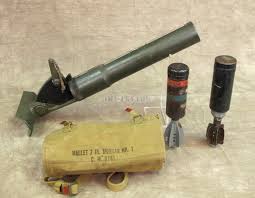
shellfiringmortar-2mortar

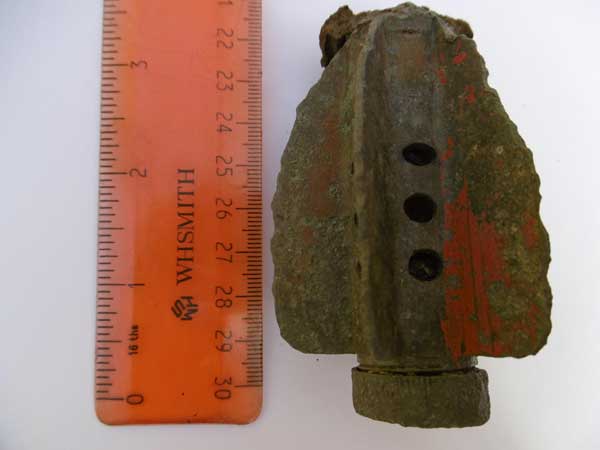
A 2″ mortar tail fin found on Berkhamsted Common, and left by the British army seventy five years ago, reminds us of past activities.

Collected as modern day litter it serves as a reminder of a quiet bucolic country life being interrupted by a violent period. In fact Berkhamsted Common has seen acts of warfare for the last two hundred years. Target butts can still be seen from Napoleonic times when it was used as a volunteer rifle range, and the first World War trenches used for training have recently been restored.

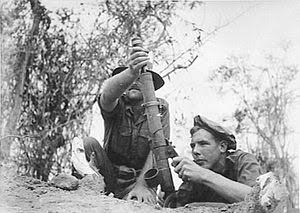
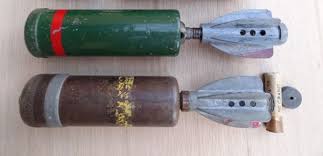
The ordnance SBML two-inch mortar, or more commonly, the “two-inch mortar”, was a British mortar issued to the British Army and the Commonwealth armies, that saw use during the Second World War and later.

It had the advantage of being more portable than larger mortars which needed vehicles for them to be carried around, and the two-inch (51mm) gave greater range and firepower than rifle grenades.

The standard service version of the 2-inch (51 mm) mortar had a barrel length of 21 inches (530 mm) and could fire a high explosive bomb weighing 2.25 lb (1.02 kg) out to a range of 500 yards. With such a short barrel the normal firing method, where the bomb was dropped down the tube and a pin in the base of the barrel struck the detonator in the tail of the bomb, would not work so firing was by a small trigger mechanism at the breech. Originally the two-inch mortar was fitted with a large collimating sight with elevating and cross-level bubbles, but this was soon dropped as unnecessary for front-line use. It was replaced with a simple white line painted up the length of the barrel. The firer only had to line this up in the direction of the target and fire a number of bombs for effect. While this method of operation appeared rather haphazard, it worked well and the practice continued long after the war.

Thanks to Barbara

Posted in Archeology, Volunteer Rangers | Leave a comment

“Woodlanders”


This slideshow requires JavaScript.

The woodlanders, those that inhabit woods, returned again in force this week to Dockey Wood, clearing up ready for next Spring and the expected mass of visitors. It does not seem that long ago when the wood was a carpet of blue, admired by hundreds or was it thousands of visitors? After the foresters had left with their heavy machinery, having thinned out the northern end of the plantation, the resulting brushwood needed to be dealt with – enter the volunteers. They did not disappoint, with another record turnout. It needed a large number of people to cut up and prepare the brushwood, and then build the “protective” shield around the now famous bluebells. It is hoped that a series of low dead-hedges will remind the visitors to – “Keep off the bluebells” Ashridge don’t like too many signs. A few of the volunteers put their creative skills to good use by building brushwood pyramids which will be used next year to protect rare “wood” orchids from predation by the deer.

Posted in Flora and Fauna, Thursday Conservation Group, Walks, Wildlife | 1 Comment

Breaking News


The Visitor Centre is being adorned with Christmas decorations…………….The sombre atmosphere has given way to a festive mood! Thanks to the crafty work of our lady volunteers, who have placed swags of evergreens at the entrance – holly, laurel and Scot’s pine. They scoured the Estate for suitable material including teasels and rose hips for highlights. Home grown variegated holly was given to add contrast. At this time of year our thoughts turn to seasonal decorations. Holly and other greenery like mistletoe were originally used in pre-Christian times to help celebrate the Winter Solstice, and ward off evil spirits. Laurel was used by the Romans in wreaths to hang over their doorways as a sign of status and success. The nearby Roman villa may have been so adorned some two thousand years ago. The Victorians planted lots of evergreen fir and yew trees around their churches, as well as laurel to signify everlasting life. It is traditional to take down Christmas decorations after Twelfth Night the 5th of January. During the Middle Ages greenery including mistletoe was often left hanging until Candlemas in early February.

Posted in Uncategorized | Leave a comment

Bryony is toxic.


She is a scrambling climber of the hedgerows. Overlooked throughout the year but obvious in Autumn and Winter as a swag of scarlet berries entwined amongst the bare branches of hawthorn or blackthorn. The plant has an important role in homeopathy well known for relieving pain associated with arthritis, and grows from a large underground tuber. There are two species of bryony – a black and a white one. The black one has black berries with the white one producing the vivid red berries in Autumn. Appearing in dense scrub where it can find support for it’s vines, the red berries spell danger, for it is highly poisonous. The large root rather like a parsnip is particularly toxic, and despite it’s bitter taste it is sometimes eaten by cattle with fatal consequences.


Posted in Flora and Fauna, Volunteer Rangers | 1 Comment