Anyone for scrub?


This slideshow requires JavaScript.

On Thursday the volunteers had a multiple choice of jobs to work on – Emily’s wild garden, potting up in the greenhouse, grass burning at Piccadilly Hill, or scrub clearance near Step’s Hill. The majority of the thirty four volunteers took a hike over Step’s Hill.

No vegetation is more maligned than scrub, and it is often underrated as a bird habitat. Scrub clearance might encourage the appearance of butterflies and wild flowers but it is detrimental to some birds, so a balance needs to be reached. The essential features of scrub are that it is composed of woody shrubs or small trees, and that it is a transitional stage between the open land and woodland. Only rarely in our region does scrub form a relatively stable vegetation – the mature thickets around the Beacon fall into this category. A mixed scrub commonly includes privet, hawthorn, blackthorn, wayfaring tree, traveller’s joy, holly, spindle berry and the now scarce juniper. Scrub is a rich habitat for birds. Scrub bird communities are highly dynamic, changing rapidly with the growth of the vegetation. As scrub invades the grassland and gradually forms a closed canopy Skylarks quickly decline while Meadow Pipits remain abundant on sparse scrub. Species characteristic of open-canopy scrub include Tree Pipit, Whitethroat, Linnet, and Yellowhammer. Reports conclude that the total number of breeding birds and their overall density increase with scrub development. Outside of the breeding season the large quantities of berries provided by scrub form an important food resource for migrant warblers, and thrushes in Autumn and Winter. Many areas of scrub are also used by roosting passerines.

Thanks to Richard Gwilt for the photos.

Posted in Thursday Conservation Group | 1 Comment

Louise Prideaux


In the “myvolunteering” newsletter for October, Louise Prideaux the N T’s volunteering correspondent for the South West, wrote a piece about being a “voice for the countryside”. Visiting the Countryfile Live exhibition at Blenheim in August where the N T had a stand, she spoke to Daniel Dodd who is the Trust’s Director of Communications. It appears that the Trust has widened it’s scope beyond historic buildings to the restoration of natural habitats like Ashridge.
BBC Coast presenter Nick Crane was a speaker at the Exhibition. He spoke enthusiastically about the Trust’s “ethos of care” which is reliant on volunteers spreading the word for it to be effective. Trust members having paid their subscriptions are entitled to know the policy of the Charity, and learn how this will be implemented at Ashridge.

You can read the article on myvolunteering.nationaltrust.org.uk  News/News by region/National news/BBC Countryfile Live; Outdoors and Nature part 2 (line 4)

Posted in Charcoal, Flint wall group, Flint Wall Volunteers, Flora and Fauna, Walks, Wildlife | Leave a comment

The good old days!


This slideshow requires JavaScript.

The Sunday volunteers worked on the bridleway which runs down from the Monument and Moneybury Hill, to the riding stables on Stocks Road. In the old days, this right of way now beloved by horse riders and mountain bikers was the main route up to Moneybury Hill cottages (originally seven) for horse drawn carts, and livestock from Pitstone heading for the common. Two hundred years ago the hillside was an open sheep-walk, without trees and scrub so it would have required little maintenance. Nowadays the track becomes quickly overgrown and requires regular attention, with the cutting back of the brambles and bushes and the overhanging tree branches. The adjacent holloway which runs parallel to the track going down to Duncombe Farm was created by the Welsh cattle drovers – their cattle wore metal shoes called cues. It has been unused and grown over for the last one hundred and fifty years!

The weather was ideal on Sunday for working out in the open, and the volunteers were protected from the keen east wind by the wildwood – it was happy volunteering according to Adele Gould.

Thanks for the posting and pictures Adele.

Posted in Sunday Group | Leave a comment

Deer Parks


This slideshow requires JavaScript.

Once again more than a dozen of the volunteers along with several dogs took a stroll around Woburn, much of it in the deer park, but only using public footpaths. The route took them from the car park (free) opposite St. Mary’s Church in Woburn and thence into Woburn park, across the deer park and in front of the Abbey. Most of this part of the walk follows the Greensand Ridge path.

There was a large group of resting red deer in the park estimated at more than three hundred (photo). Further on there were other types of deer, a couple of which had their antlers locked. There was a lot of noise and strutting going on although they didn’t actually see any more fighting.

Outside of the park the volunteers continued to Eversholt and had a break sitting under a Holm Oak, beside the cricket pitch and village sports centre.

Going north towards Ridgmont they re-entered the park at the ‘top’ of the hill. The landscape there is more wooded and full of other types of deer. There were however some groups of young red deer stags.

Overall they probably saw more than five hundred deer of various types along the 6.75 mile walk.

The deer park at Ashridge was enclosed some time after 1610, and was in two parts, one for the red deer and the other for fallow deer. By the time Peter Kalm the Swedish botanist visited the area in 1748 there was a single park supporting some one thousand deer. When the Estate was sold off in the 1920’s the red deer were transferred to Richmond Park, in Surrey.

Thanks to Peter Bushill.

Posted in Events | Leave a comment

Frithsden Vineyard Coffee Morning


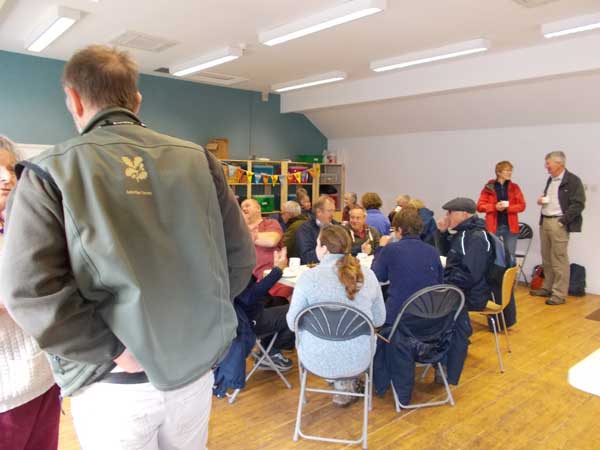
Further to our Volunteers Coffee Morning post on the 11th October, Babs has firmed up a date at Frithsden Vineyard for Wednesday 2nd November at about 11.00am.

We are expecting to pay for the tea, coffee, cakes and wine, but there will be no fireworks! However Babs understands you can buy bottles of wine to take home.

Do come along for some enlightened conversation.
If you want to please let Babs know as she will have to tell them numbers asap… Email Babs at barbara306@sky.com
Posted in Events | Leave a comment

What is it?


This slideshow requires JavaScript.

What is it? What does it do? It’s a conundrum.

It looks impressive, and it looks splendid – a natural link between the man-made features of the Visitor Centre and the landscape of the Estate.

Is it to enclose something, or to keep people out? Will it stand the test of time? – little Johnny will need to retrieve his ball and Mary her frisbee! Will it become a litter bin?

Without a gateway it is a mystery to most people. It will be a talking point for months to come. Hopefully a sign will appear explaining it’s merits for conservation.

It is of course the latest and longest (some 100 yards) of dead-hedge produced by twenty five of the Thursday volunteers, in a single morning. Like the one at Deer Leap on October 2nd, when we said it could become fashionable!

The logs are from the clearance work in Harding’s Rookery carried out by the volunteers earlier in the year, which have now been put to good use. With a plentiful supply of timber on the Estate, coupled with the experience of the volunteers , we can expect the fashion to continue!

Posted in Uncategorized | 1 Comment

The season of mists and rutting


rut2

The volunteers turned out in force despite the inclement weather to view the annual rut taking place in Thunderdell Park. For fallow deer the rut takes place in October. With over one thousand two hundred deer on the Estate it is not too difficult to locate a rut. Rutting activity is most intense soon after dawn, when the male deer are pumped full of testosterone and highly aggressive – so don’t get too close to the action. A number of bucks are killed each year in the battle for a harem – at least three so far this year.

Lawrence led the walk and gave a talk afterwards on the Trust’s approach towards it’s flora and fauna . He was at pains to endorse the annual cull, since it seems that Ashridge should only have some four hundred deer relative to the habitat.

rut1

Posted in Events | Leave a comment

BLOG on………


November is National Blogging Month according to the Woodland Trust.

Let’s get the whole Estate talking about the landscape and habitat at Ashridge, during the season of mists and mellow fruitfulness!

Whether you have blogged before or not, now is the time to share the love.

Posted in Events | 2 Comments

Volunteers’ Coffee Morning


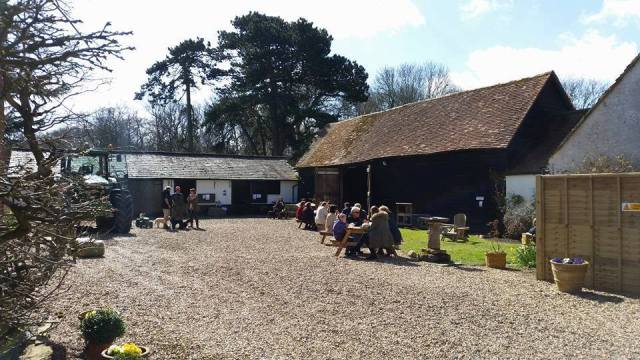
Babs has suggested that we have another coffee morning for the volunteers, similar to the last one at Hill Farm in July.

The venue at Hill Farm is not available this year as they are awaiting planning permission for their cafe venture.

Suggestions as to where and when we hold the next gathering of kindred spirits, please. Either reply to this post or email Babs directly barbara306@sky.com

hill_farm

Posted in Events | Leave a comment

The Beacon


This slideshow requires JavaScript.

The fires around the hill are not celebratory beacons, they are not warning of an impending invasion, merely a sign of human activity! – conservation activity.

The last time there was a celebratory fire on the Beacon was in the summer of 1911, celebrating the coronation of king George V.

On Thursday there were two new members in the team, and they were joined by six volunteers from British Rail helping to collect and burn the foliage, after Pete the ranger had strimmed the hillside. This operation is repeated every couple of years to help the flowering of the wild flowers.

Posted in Thursday Conservation Group | 1 Comment